Wellness · Singtel & AIA · 2019

StepUp.

A wellness app that rewarded users with data for walking — Singtel's first non-telco service on the MySingtel App. 250,000 sign-ups in 3 months with a 97% onboarding rate. I was the UX designer responsible for prototypes, onboarding flows, micro-interactions, and visual development.

Role UX Designer
Client Singtel & AIA
Duration 3 months
Team Design Director, Product Director, UX Designer (Issac)
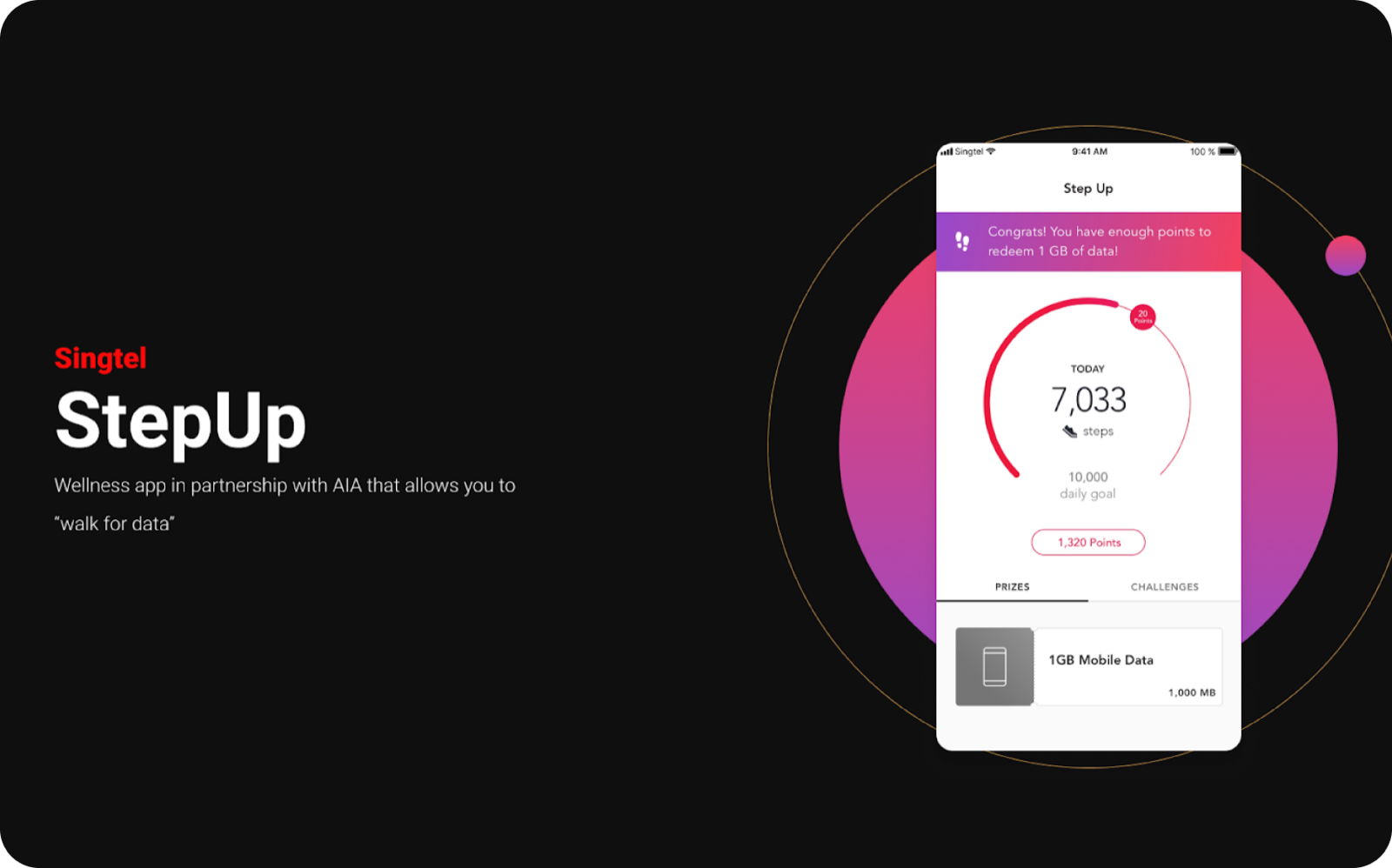
StepUp app interface showing walk-for-data wellness dashboard
Fig. 01 · StepUp — walk for data, integrated within the MySingtel App
The Brief
01

Walk for data.

StepUp was a wellness app created as part of Singtel's digital transformation to expand beyond traditional telco experiences. Partnering with AIA, we rewarded users with mobile data for walking, integrating a completely new service within the existing MySingtel App. I was the UX designer on a team led by our Design Director and Product Director.

How do you introduce a new non-telco service on an existing telco app — while collecting user data with minimal friction and teaching new concepts without overwhelming onboarding screens?
250K
Sign-ups in 3 months
97%
Onboarding completion
1st
Non-telco service on MySingtel
The Problem
02

A new service in an old app.

We needed to introduce something entirely new — a wellness product — inside an app people used for telco billing and data top-ups. Users didn't expect it, and the AIA partnership required us to collect personal data (name, gender, DOB) during onboarding.

How might we introduce a non-telco wellness service within the existing MySingtel App — while collecting personal data for the AIA partnership, onboarding new concepts, and maintaining a frictionless experience?
Pain № 01
critical

Service integration.

How to introduce a wellness service within an existing telco app without disrupting current user flows or feeling like an intrusion.

Impact adoption
HMW

How might we make a non-telco service feel native within the MySingtel App?

Pain № 02
high

Data collection friction.

AIA required personal data (name, gender, DOB) during onboarding. Collecting this without making users feel like they're filling out a form was essential.

Impact completion rate
HMW

How might we collect personal data without it feeling like a form?

Pain № 03
high

Concept introduction.

Users needed to learn new concepts — step tracking, data rewards, ticket redemption — without lengthy tutorials or text-heavy onboarding screens.

Impact comprehension
HMW

How might we teach a reward system through doing rather than explaining?

Pain № 04
medium

Brand consistency.

StepUp needed to feel like MySingtel — Gratifying, Reliable, Open, Community — while being distinct enough to register as something new and valuable.

Impact brand
HMW

How might we create a distinct wellness identity within an existing brand system?

The Process
03

Research, test, simplify.

We started with 200+ user tests, ran three sign-up concepts in parallel, prototyped an interactive weight scale in HTML, and killed it when it proved slower than a text field. The best design was often the simplest.

Step 01

Research.

Curiosity & insight

Usability tests with 200+ people. Free data is attractive. Users 40-60 already use wellness apps. A milestone checker would improve the redemption flow.

200+ usersMock conceptsInsights
Step 02

Strategy.

Alignment & focus

Brainstorming sessions with Design and Product directors. What data must we collect? What can wait? Profiling moved to Challenges flow to keep onboarding light.

Data collectionFeature scopePrioritisation
Step 03

Design.

Iteration & clarity

Entry point banners, three sign-up concepts tested, interactive weight scale prototyped and dropped. Simple text fields beat clever interactions.

PrototypesA/B/C testingKill darlings
Step 04

Launch.

Pride & validation

250,000 sign-ups within 3 months. 97% onboarding rate. Successfully introduced Singtel's first non-telco service within the existing MySingtel App.

250K users97% completionFirst-of-kind
Foundation

MySingtel design principles.

01

Gratifying

Small pleasures, making everyday better, making you smile.

02

Reliable

Anywhere anytime, consistent, accessible, dependable.

03

Open

All walks of life, inclusive, airy, approachable.

04

Community

Diversity, harmony, Singaporean, teamwork.

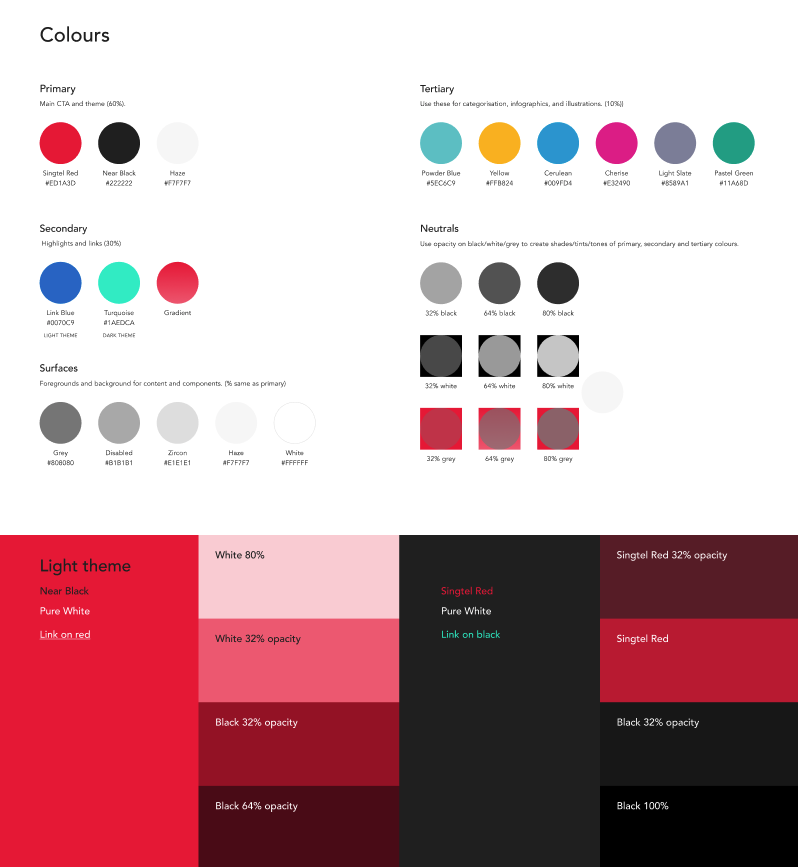
MySingtel App color guide used as the foundation for StepUp
Fig. 02 · MSTA color guide
MySingtel App component library
Fig. 03 · MSTA component library
From mechanics → experience

Three design strategies.

01
Onboarding · Learn by doing

Teach through action.

Instead of explaining the reward system, we built redemption into the onboarding flow itself. Users received a 1GB data voucher upon completion — learning the claim flow by actually doing it.

02
Data collection · Reduce friction

Don't make it feel like a form.

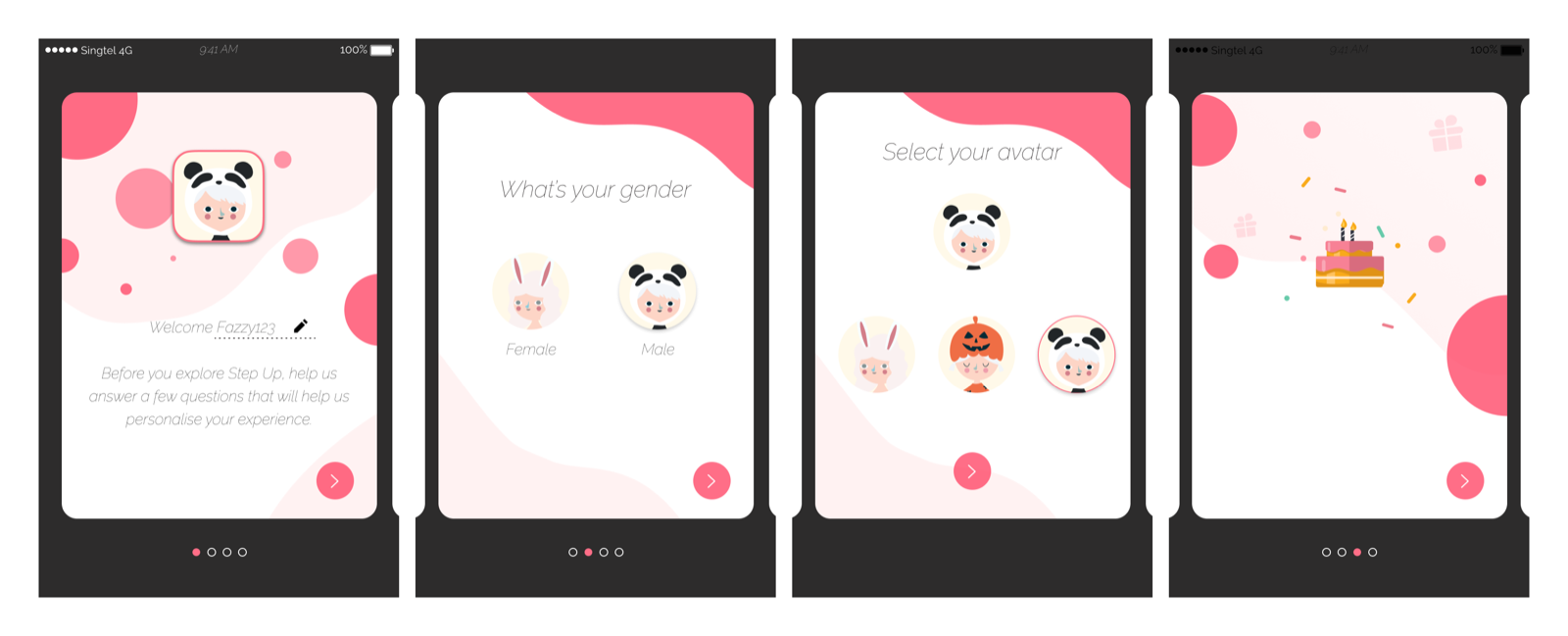
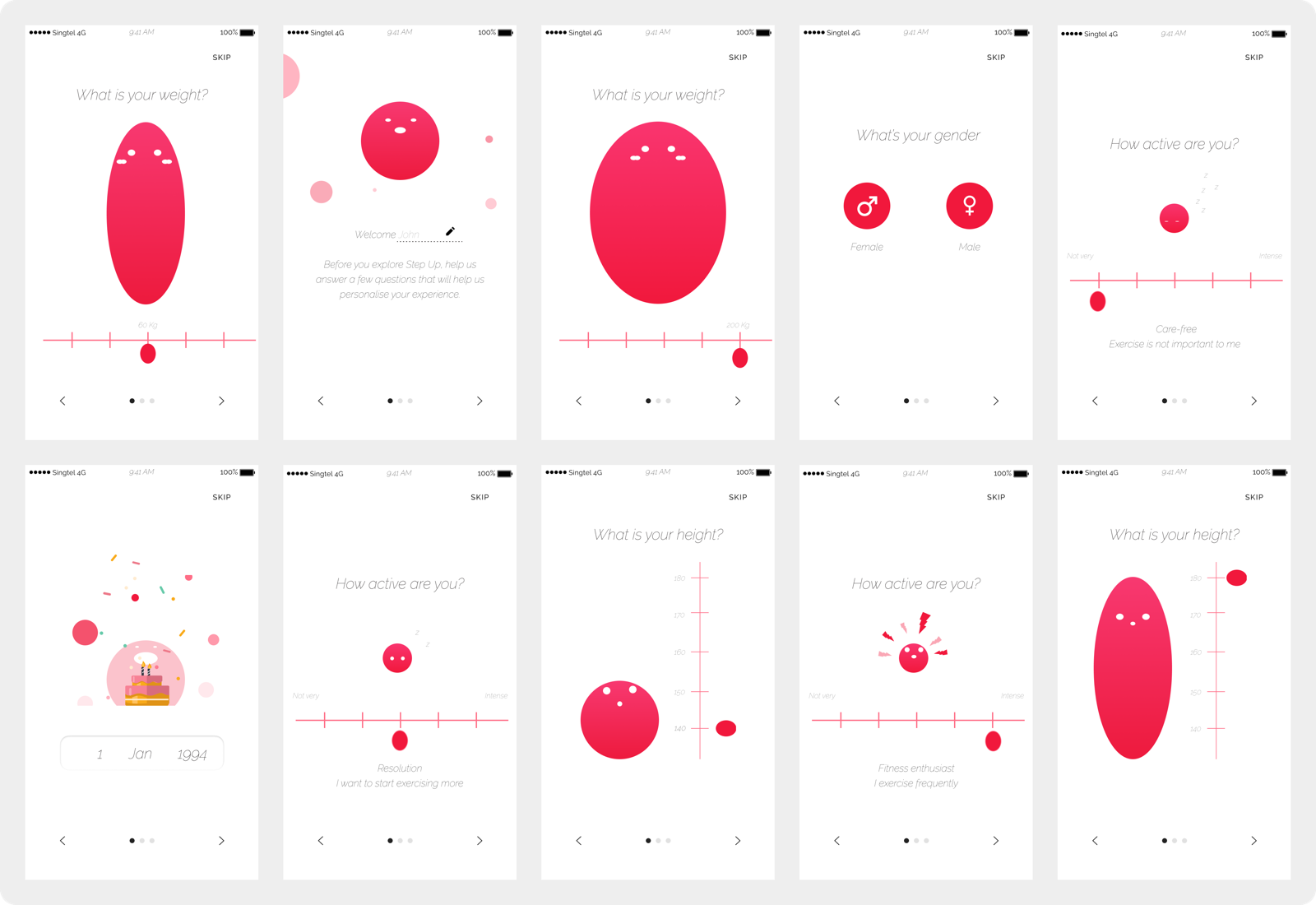
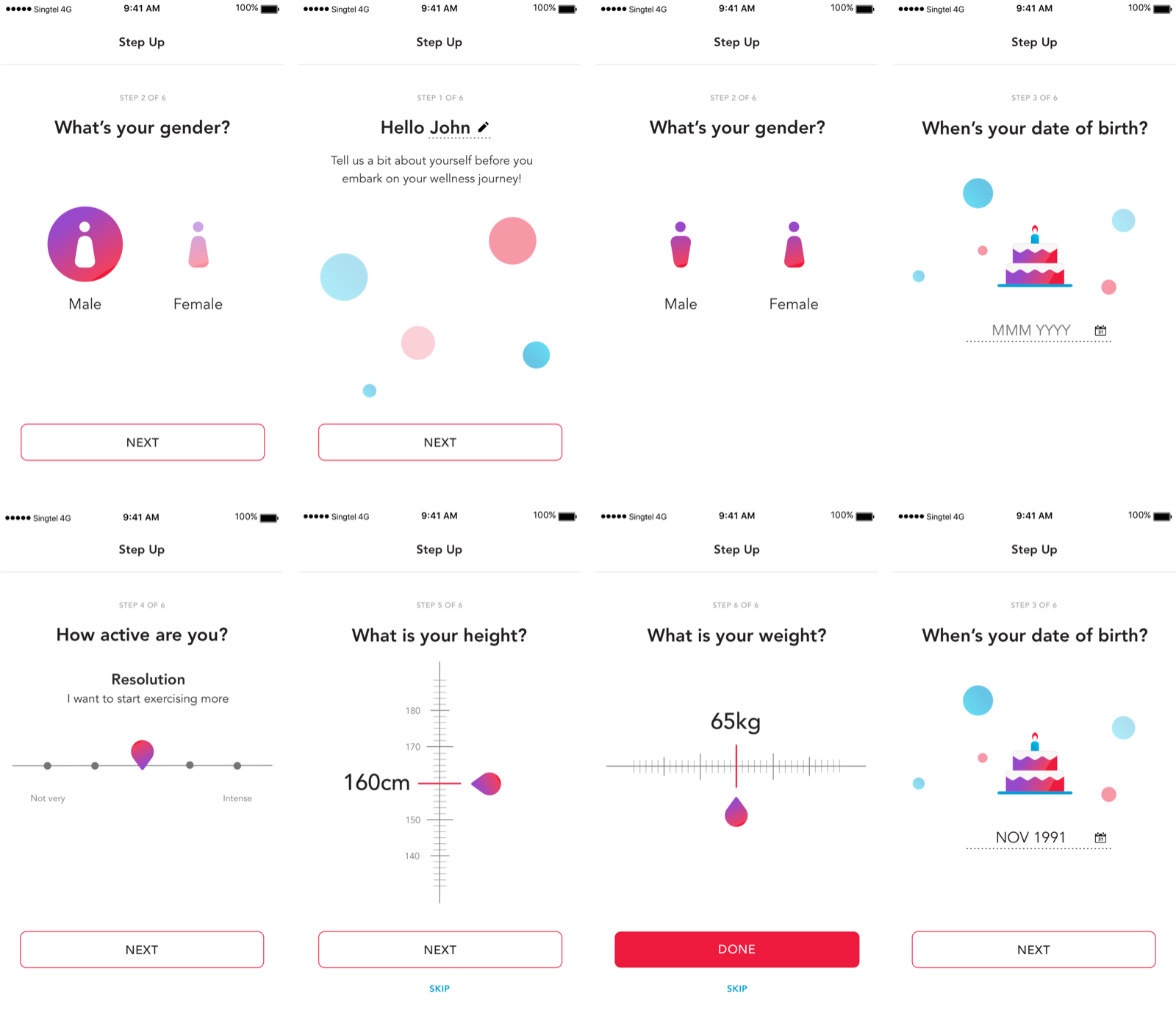
Three sign-up concepts tested: cute/playful, brand-focused, and task-focused. The task-focused approach won — clean, purposeful, and fitting the brand. Illustrations and interactions replaced clinical form fields.

03
Entry point · Show value early

Progress over promotion.

Initial banner design minimised features. Testing revealed users needed to see their step progress to feel the app was gratifying. We prioritised information over space — showing collection data upfront.

The Solution
04

250K users in three months.

The final design used a six-step onboarding flow, progressive entry banners, and immediate reward redemption to achieve a 97% completion rate. Every interaction served a purpose — no decorative complexity.

Feature 01 · Entry Point

Show progress, not promotion.

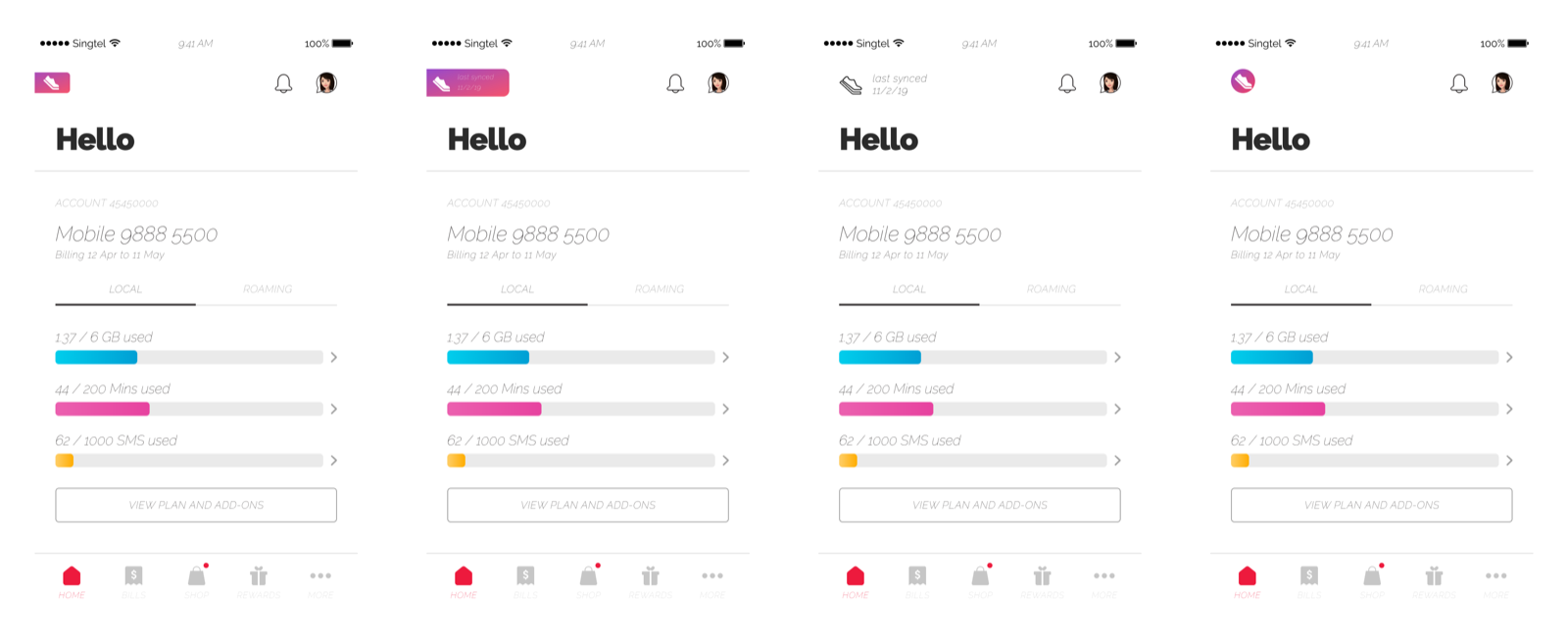
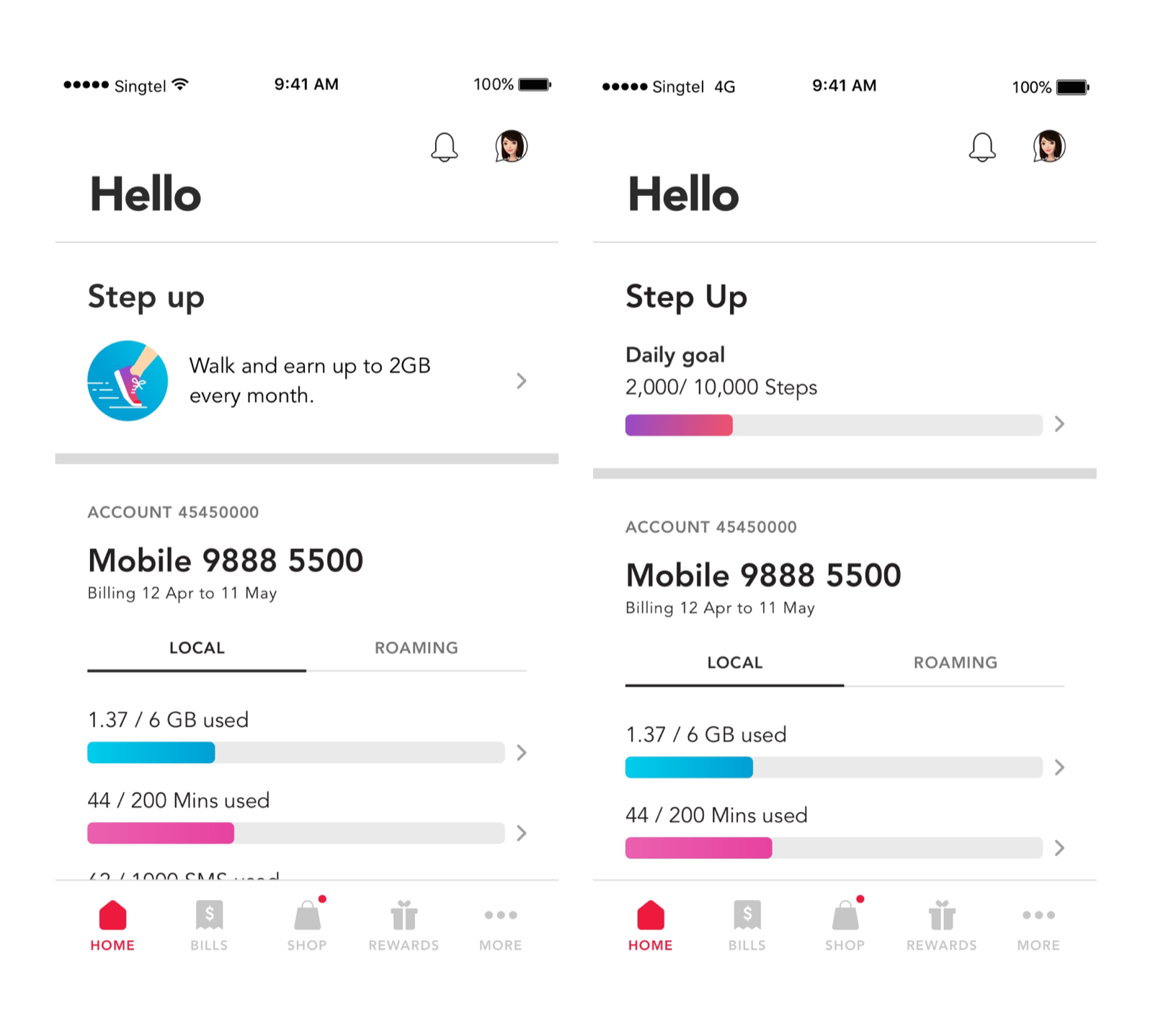
The banner evolved from minimal introduction to progress-first design. Users needed to see their step count to feel the app was delivering value — gratifying, reliable, and open.

  • AInitial concept failed. Minimal feature introduction didn't engage users — they couldn't see the value.
  • BProgress-first redesign. Showing step collection upfront made the experience immediately gratifying.
  • CAdaptive display. Banner evolved based on user state — new users saw onboarding CTA, returning users saw their progress.
Insight Users preferred seeing their progress over a clean, minimal banner. Information was more valuable than space.
Initial minimal banner concept for StepUp
Fig. 04 · Initial banner — minimal, but users couldn't see the value
Final progress-focused banner showing step count
Fig. 05 · Final banner — progress-first, immediately gratifying
Feature 02 · Sign-Up Experience

Data collection without the form.

We tested three sign-up concepts to find the right balance between visual engagement and functional clarity. The task-focused approach won — it fit the brand and reduced cognitive load.

  • AConcept 1: Cute & Playful. Engaging but felt out of place within the MySingtel brand identity.
  • BConcept 2: Brand & Graphics. On-brand but too heavy — distracted from the data collection task.
  • CConcept 3: Task Focused. Selected. Clean, purposeful, minimal visual clutter. Users completed it without feeling like they were filling out a form.
Learning We also prototyped an interactive weight scale in HTML — tested with 5 users. The slider was inaccurate and created friction. Simple text fields were better. Interactions should serve a purpose, not be decorative.
Sign-up concept 1 — cute and playful approach
Fig. 06 · Concept 1 — Cute & Playful
Sign-up concept 2 — brand and graphics focused
Fig. 07 · Concept 2 — Brand & Graphics
Sign-up concept 3 — task focused, selected approach
Fig. 08 · Concept 3 — Task Focused (selected)
Feature 03 · Onboarding Flow

Six steps to done.

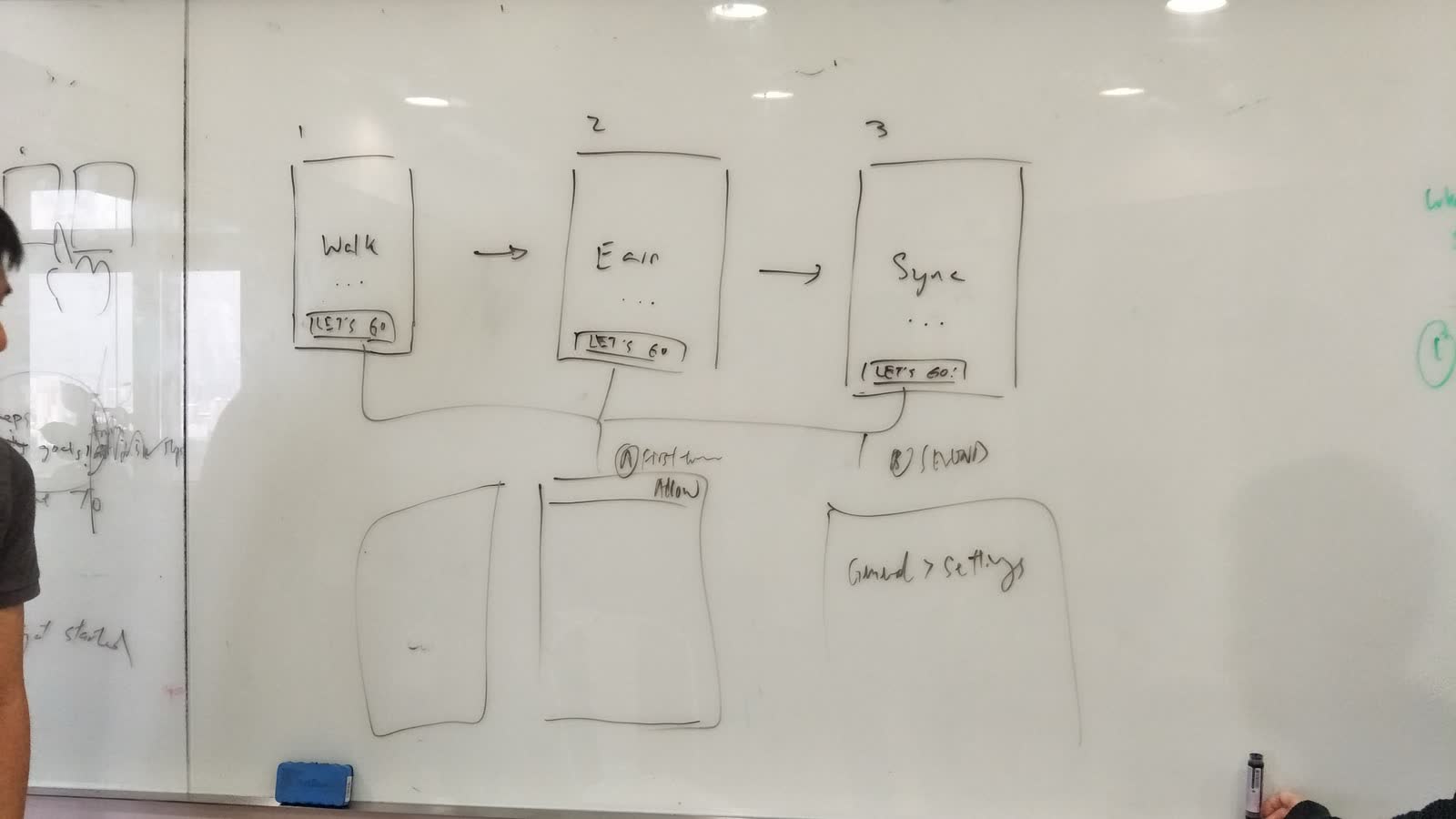
The onboarding flow walked users through six stages: entry, registration, animated dashboard, notifications, ticket introduction, and their first redemption. A limited-time 1GB data prize motivated sign-ups and taught the redemption flow at the same time.

  • AImmediate reward. Users received a 1GB voucher upon completion — learning the claim flow by actually claiming it.
  • BAnimated dashboard. Step count and progress animated in real-time, creating a positive feedback loop.
  • CProgressive introduction. Features introduced one at a time — no screens with five new concepts at once.
Impact 97% onboarding completion rate. Users understood the full reward system by the time they finished — because they'd already used it.
Complete StepUp onboarding flow showing six stages
Fig. 09 · Six-step onboarding flow
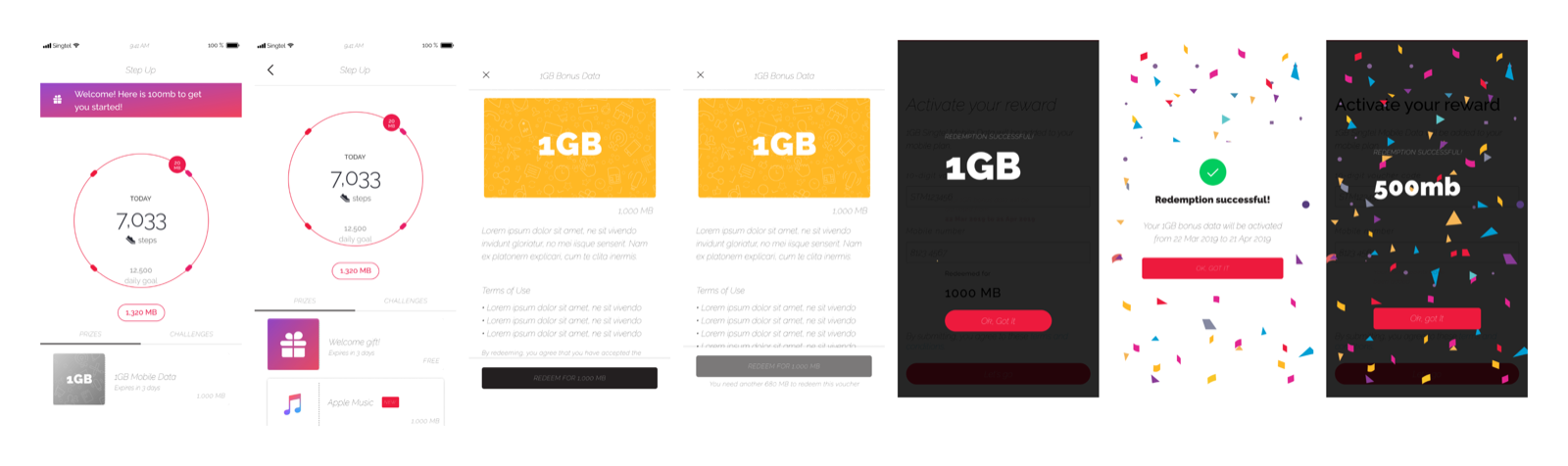
Feature 04 · Redemption & Feedback

Actions that teach.

Instead of explaining the redemption system, we embedded it into onboarding. Animation created positive feedback loops. Notifications, vouchers, and loading states gave users clarity at every step.

  • AAnimation as education. Transitions and micro-animations showed users what was happening — no text walls needed.
  • BProgress clarity. Loading buttons, voucher states, and notification badges gave immediate feedback on every action.
  • CVisual gratification. The reward moment — data added to your account — was designed to feel as good as the walking itself.
Reflection Key learnings: break tasks into bite-sized pieces, use actions to teach users rather than text, and ensure interactions serve a purpose rather than being decorative.
Fig. 10 · Redemption flow — embedded into onboarding
Design techniques used for feedback loops and visual gratification
Fig. 11 · Animation, notifications, and visual gratification techniques
— 30 —
StepUp
Designed by Design Director, Product Director, Issac Ting (UX)
Singtel & AIA · 2019
StepUp demonstrated that a non-telco wellness service could thrive within an existing telco app — by designing for user motivation and emotional experience, not just task completion.
End of case study